A plentiful supply of clean potable water is surely an essential component of a healthy living environment. However, increasing living standards and population densities continue to put pressure on available water supplies, such that investment in new sources and water treatment facilities is expanding rapidly and will continue to do so for some time to come.
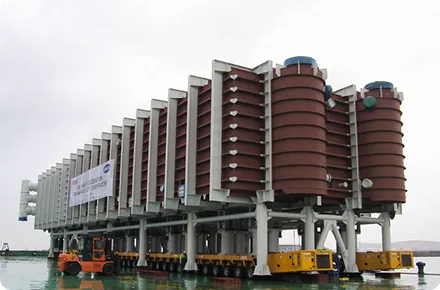
Whether it is to expand the purification of water from existing sources, or to bring on–stream completely new types of supply such as desalination, we find an increasing need for tubes, valves, filters and other components made from stainless steel. Its corrosion resistance is an obvious benefit for such components but so, too, are its ease of fabrication and its cleanability. A further important consideration is the inert nature of stainless steel from a biological standpoint. Increasingly stringent water purity standards require materials that do not leach into the water significant traces of hazardous constituents. In this section, papers and other publications describe the many ways that stainless steels help to prevent contamination of our lakes and rivers as well as to treat and distribute the water from our taps that so often we take for granted.
Wasting fresh water: stopping systemic failures
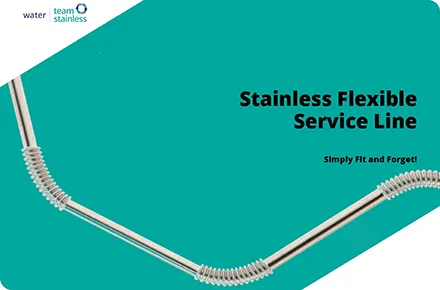
Water loss through leaking water pipes is a problem for cities all over the world. Some of them are losing water at upwards 40% per year, and this is all water which has already been treated. A recent study by the OECD has shown that it is not only the under developed or even the developing cities that are so affected – even the capital cities of major economies are losing far more water than is sustainable or even viable. The world stainless association has published a brochure which reports their research into the service pipe lines in the cities of Tokyo, Seoul and Taipei. All three cities have started to use stainless steel corrugated pipes for transporting potable water from the water mains to the interior of the building.
Changing their pipes to stainless steel ones has meant enormous amounts of water have been saved. With this booklet and a webinar, worldstainless would like to tell this story to the rest of the world, so other cities and communities will consider stainless steel pipes an option to reduce leaking pipes and to save precious water.
The brochure is available in Chinese, Dutch, English, French, Italian, Korean, Portuguese and Spanish [clicking on the language will download the pdf].
Stainless steel in sewage treatment plants
Water – the blue gold of the blue planet, used in so many ways: for agriculture, for the processing and preparation of food and beverages, for heating and cooling, for energy generation, and for the production of a wide spectrum of industrial and consumer goods. About 70% of the world’s surface is covered with water, but less than 3% of it is fresh water, making it a very precious commodity. The use of water produces wastewater. Like any other waste products, wastewater is a valuable, sustainable resource and should be treated appropriately.
This brochure will give you more detailed information on where stainless steel is used in sewage treatment plants and why. Operators of WWTPs and the manufacturers of the equipment used in them appreciate stainless steel for a number of reasons. They are very much aware of its technical and economical advantages. Some of their testimonies have also been included in this brochure.
Stainless steel for rainwater goods and accessories
The following are being discussed:
- Functional aspects
- Architectural features
- Environmental qualities
- Choice of grade and surface
- Applications (roof geometries, bitumen-felt roofs, historic monuments)
- Guidelines (tools, forming, soft-soldering, adhesive bonding, fixings)
- Accessories
Besides English, this publication is also available in Czech, Dutch, Finnish, French, German, Italian, Polish, Spanish and Swedish
Stainless steel in waste water treatment
In sewage treatment stainless steel has a track record of superior technical and economic performance. Its further development potential in this application is huge: urbanisation is accelerating throughout the world. The efficient handling and treatment of waste water is a key element of sustainable urban development. This Euro Inox shares current experience with designers and operators of waste water treatment facilities. The 28-page publication “Performance of Stainless Steels in Waste Water Installations” examines the specific requirements on stainless steel in this environment and makes conclusions for grade selection, design, fabrication and installation. Besides the impact of the waste water, also atmospheric influences and the corrosion resistance in soil are addressed. Finally, the economic benefits are described in terms of life cycle cost.
This brochure is available in English, German and Polish